Wednesday, 18 June 2025

Frozen in Time: The Mesmerizing World of Methane Bubbles


Frozen methane bubbles in Abraham Lake

In the vast tapestry of Earth's natural wonders, some phenomena stand out for their otherworldly beauty and scientific significance. Among these rare spectacles are frozen methane bubbles—ethereal, suspended discs of trapped gas that create stunning patterns beneath the ice of certain lakes during winter. These bubbles aren't just visually captivating; they tell a compelling story about our planet's complex ecological systems and changing climate.

A Visual Spectacle Like No Other

Close-up of frozen methane bubbles

Picture this: a frozen lake surface that appears to hold countless white discs of various sizes, stacked one above another like suspended pancakes or ghostly jellyfish frozen in time. These are methane bubbles, captured in their journey toward the surface when winter temperatures rapidly freeze the water around them.

The most famous location to witness this phenomenon is Abraham Lake in Alberta, Canada. This artificial reservoir, created in 1972, has become world-renowned for its spectacular winter display. When conditions are right, typically between December and March, the lake transforms into a natural art gallery with thousands of bubbles creating patterns that photographers and nature enthusiasts travel from around the world to witness.

What makes these bubbles so visually striking is how they interact with light. The frozen discs appear white or silvery against the lake's deep blue or clear ice. When sunlight hits the surface, it creates an almost three-dimensional effect, with bubbles seeming to float at different depths. At sunrise or sunset, the low-angle light can make the entire lake surface glow with an otherworldly luminescence.

Unlike many natural wonders that require specialized equipment or difficult journeys to witness, frozen methane bubbles are remarkably accessible. With proper timing and basic safety precautions, visitors can walk directly on the frozen lake surface to observe and photograph these bubbles up close—a rare opportunity to interact intimately with such a unique natural phenomenon.

The Science Behind the Beauty

The story of these bubbles begins not at the water's surface but at the bottom of the lake. Methane gas is produced when organic matter—plants, algae, and other biological materials—decomposes without oxygen. In lakes, this process occurs in the sediment at the bottom, where bacteria break down organic matter through a process called anaerobic decomposition.

As this decomposition occurs, methane gas (CH₄) is released and rises toward the surface in bubble form. During warmer months, these bubbles simply pop at the surface and release their gas into the atmosphere. But when winter arrives and temperatures plummet, something magical happens: as the lake begins to freeze from the top down, rising bubbles become trapped and frozen in place.

What's particularly fascinating about this process is its layered nature. As the ice thickens gradually over the winter season, new bubbles continue to rise and become trapped at different levels. This creates the distinctive stacked appearance, with bubbles appearing to sit one atop another like a tower of transparent discs.

The size and shape of these bubbles vary widely. Some are tiny, barely visible specks, while others can span several feet in diameter. Their shapes range from perfect circles to elongated ovals or irregular forms. This variation depends on factors including the amount of decomposing material below, the rate of gas production, water depth, and how quickly the freezing occurs.

The clarity of the ice also plays a crucial role in the visual impact of these bubbles. In lakes like Abraham, the water is often exceptionally clear, and the freezing process happens in a way that creates transparent ice—allowing for unobstructed views of the bubbles at various depths.

A Beautiful Danger

Despite their enchanting appearance, frozen methane bubbles represent a complex environmental story. Methane is a potent greenhouse gas—approximately 25 times more effective at trapping heat in the atmosphere than carbon dioxide over a 100-year period. When these bubbles eventually melt and release their gas, they contribute to atmospheric methane levels.

This creates a concerning feedback loop in our changing climate. As global temperatures rise, permafrost and previously frozen areas thaw, releasing more organic matter for decomposition. This increases methane production in lakes and other water bodies. More methane means more warming potential, which in turn can accelerate further thawing and methane release.

Scientists study these bubbles not just for their beauty but as important indicators of methane emission rates from lakes. By measuring the volume and concentration of gas in these bubbles, researchers can better understand methane flux from freshwater systems and how it might change as our climate continues to warm.

In the Arctic and subarctic regions, this phenomenon takes on even greater significance. As permafrost thaws, ancient organic matter that has been frozen for thousands of years becomes available for decomposition, potentially releasing massive amounts of previously sequestered carbon into the atmosphere as methane.

The bubbles we see in lakes like Abraham represent just a visible fraction of a much larger global process. They serve as a beautiful but sobering reminder of the invisible changes occurring in our environment and the delicate balance of our planet's carbon cycle.

Witnessing the Phenomenon

For those fortunate enough to witness this phenomenon firsthand, timing is everything. The prime viewing season typically runs from mid-December through March, with January and February offering the most reliable conditions. The ice needs to be thick enough to safely walk on (at least 4 inches/10 cm), yet clear enough to see the bubbles distinctly.

Abraham Lake in Alberta remains the most famous location, but similar bubble formations can be observed in other cold-climate lakes with sufficient organic material and clear ice formation. Lake Baikal in Russia, certain lakes in Finland, and some water bodies in Alaska and northern Minnesota also display this phenomenon.

Visiting requires careful preparation. The ice must be tested for safety, as thickness can vary significantly across a single lake. Proper winter gear is essential, as temperatures at these locations regularly drop well below freezing. Many visitors choose to join guided tours, which provide safety equipment and local knowledge about the best viewing spots.

Photography enthusiasts find these bubbles particularly rewarding subjects. The interplay of light through the clear ice creates opportunities for stunning images, especially during the golden hours around sunrise and sunset. Wide-angle lenses capture the expansive bubble fields, while macro photography reveals the intricate details of individual bubble structures.

Beyond their photogenic quality, there's something profoundly moving about standing on a frozen lake, looking down through clear ice at these suspended moments of time. Visitors often describe a sense of connection to the hidden processes of the natural world—a rare glimpse into normally invisible ecological cycles.

The Bigger Picture

Frozen methane bubbles represent more than just a beautiful winter phenomenon; they offer a window into the complex relationship between our planet's carbon cycle, climate systems, and human activity. As we continue to influence Earth's climate through greenhouse gas emissions, understanding natural methane sources and sinks becomes increasingly important.

Research on these bubbles contributes to our understanding of freshwater ecosystems and their role in the global carbon budget. Scientists use various techniques to study them, from simple observation and measurement to sophisticated isotope analysis that can determine the source and age of the carbon being released.

These studies have revealed that lake methane emissions vary significantly based on factors like latitude, depth, surrounding vegetation, and human impacts on watersheds. Some research suggests that as climate warming continues, northern lakes may produce substantially more methane, creating another positive feedback loop in our climate system.

Yet amid these concerning implications, the frozen bubbles remind us of nature's capacity for beauty even in processes we might otherwise view with alarm. They represent a perfect intersection of art and science—structures that can be appreciated for their aesthetic appeal while simultaneously teaching us about our changing planet.

For the curious mind, these bubbles offer endless fascination. Each one tells a story about decomposition, gas physics, ice formation, and climate processes. They connect the invisible world of microbial activity to the visible realm of ice patterns we can observe with our naked eyes.

In a world where many natural wonders are disappearing, frozen methane bubbles may actually become more common in certain regions as warming temperatures increase methane production in lakes. This creates a bittersweet irony—a beautiful phenomenon that becomes more prevalent partly because of troubling changes in our climate.

As we continue to explore and understand Earth's unique and rare phenomena, frozen methane bubbles stand as a reminder of how much beauty and knowledge awaits those willing to venture out in the cold winter months, look closely at seemingly simple ice, and contemplate the complex processes that create such striking natural art.

Whether you're a scientist studying climate change, a photographer seeking remarkable images, or simply someone who appreciates natural wonders, these frozen bubbles offer something truly special—a moment when the invisible becomes visible, when a greenhouse gas transforms into an object of beauty, and when the complex workings of our planet are displayed in a form we can all appreciate and understand.

Photo Credits:
- Abraham Lake frozen methane bubbles: Corey Tran on Unsplash
- Close-up of frozen methane bubbles: Miriam Jones, USGS (Public Domain)

Bioluminescent Beaches: Nature's Glowing Shorelines


Bioluminescent beach at night with glowing blue waves and palm trees

Bioluminescent plankton creating a magical blue glow along a tropical shoreline at night.

In the darkness of night, along certain shorelines around the world, something magical happens. As waves crash against the beach and water laps at the sand, the ocean begins to glow with an ethereal blue light. This isn't the work of special effects or artificial lighting—it's a natural phenomenon known as bioluminescence, where living organisms produce and emit light. Bioluminescent beaches represent one of nature's most enchanting displays, creating scenes that seem plucked from fantasy or science fiction.

These glowing shores have captivated humans for centuries, inspiring myths, legends, and scientific curiosity. From the "sea of stars" in the Maldives to the famous bioluminescent bays of Puerto Rico, these radiant coastlines offer a glimpse into the remarkable biological processes that allow living creatures to produce light. In this exploration of bioluminescent beaches, we'll dive into the science behind the glow, discover the most spectacular locations around the world, and learn about the delicate environmental conditions that make this phenomenon possible.

The Science of the Glow

The mesmerizing blue light that illuminates bioluminescent beaches comes primarily from microscopic marine organisms called dinoflagellates. These single-celled protists are a type of plankton that float freely in the ocean. While they're tiny—typically measuring between 0.0002 and 0.008 inches (0.005 to 0.2 millimeters)—they can gather in such enormous numbers that they transform entire stretches of coastline into glowing wonderlands.

The most common bioluminescent dinoflagellate species is Noctiluca scintillans, often called "sea sparkle." Other prominent species include Pyrocystis fusiformis and Lingulodinium polyedra. These organisms contain a special chemical called luciferin, which reacts with oxygen when the cells are agitated or disturbed. This reaction is catalyzed by an enzyme called luciferase, resulting in the release of energy in the form of light—a process similar to how a glow stick works, but entirely natural.

What's particularly fascinating about dinoflagellate bioluminescence is that it's mechanically triggered. When the water around these organisms is disturbed—by breaking waves, swimming fish, or even human movement—they emit their characteristic blue glow. This is why the phenomenon appears most dramatic along shorelines where wave action is constant, or when swimmers move through bioluminescent waters.

The blue color of the light isn't random. Bioluminescent organisms typically produce blue light because blue wavelengths travel farthest in water. This evolutionary adaptation ensures that the light signal can serve its biological purpose effectively. Some species can produce green, yellow, or even red light, but blue predominates, especially in marine environments.

From an evolutionary perspective, bioluminescence serves several important functions for dinoflagellates. The primary purpose appears to be defense against predators. When a small creature attempts to eat a dinoflagellate, the resulting flash of light can startle the predator or, more importantly, attract larger predators that might eat the original attacker—a strategy known as the "burglar alarm" effect. The light may also help disrupt the predator's night vision, giving the tiny organisms a chance to escape.

The chemistry behind bioluminescence is remarkably efficient. Unlike incandescent light bulbs, which convert most of their energy into heat, bioluminescent reactions convert nearly 100% of their energy into light with virtually no heat loss. This makes it one of the most efficient light-producing processes known to science.

Interestingly, not all dinoflagellates glow continuously throughout the night. Many species follow circadian rhythms, with their bioluminescent capabilities peaking during the darkest hours and diminishing near dawn. This timing mechanism helps conserve energy and ensures that the light serves its defensive purpose when it's most needed—during the night when visual predators are active.

Famous Bioluminescent Beaches Around the World

While the scientific explanation for bioluminescent beaches is universal, the experience of witnessing this phenomenon varies dramatically depending on location. Some beaches feature subtle sparkles that appear only when the water is disturbed, while others showcase dramatic blue waves that illuminate entire coastlines. Here are some of the world's most renowned locations for experiencing this natural light show:

Mosquito Bay, Vieques, Puerto Rico

Often cited as the brightest bioluminescent bay in the world, Mosquito Bay (Puerto Mosquito) on the island of Vieques holds the Guinness World Record for the brightest bioluminescent bay. The bay's unique geography—a narrow entrance to a sheltered body of water—creates ideal conditions for dinoflagellates to thrive. The concentration of these organisms can reach up to 700,000 per gallon of water, creating an intensely bright display. The bay is so bright that on moonless nights, you can see the glowing silhouettes of fish swimming beneath the surface.

Puerto Rico is actually home to three bioluminescent bays: Mosquito Bay, La Parguera, and Laguna Grande. This unusual concentration of bioluminescent waters in one region is due to the perfect combination of climate, nutrients, and protected bays that allow dinoflagellate populations to flourish year-round.

Luminous Lagoon, Jamaica

Near Falmouth on Jamaica's north coast, the aptly named Luminous Lagoon is where the Martha Brae River meets the Caribbean Sea. This brackish environment creates ideal conditions for the bioluminescent microorganisms. What makes this location particularly special is that the glow here tends to be bright enough that visitors can see their entire bodies outlined in blue light when swimming. The contrast between the warm tropical air and the cool, glowing water creates an unforgettable sensory experience.

Vadhoo Island, Maldives

Often referred to as the "Sea of Stars," the beaches of Vadhoo Island in the Maldives offer one of the most photogenic bioluminescent displays in the world. Here, the glowing blue waves contrast dramatically with the white sand beaches and star-filled skies above. The phenomenon is particularly vivid during the summer months when water temperatures are optimal for dinoflagellate reproduction.

Toyama Bay, Japan

Toyama Bay on Japan's western coast is famous not only for its bioluminescent shores but also for a unique firefly squid (Watasenia scintillans) that contributes to the luminous display. These small squid, measuring about 3 inches long, have special light-producing organs called photophores that create a different kind of bioluminescence than dinoflagellates. From March to May, these squid gather in the bay to spawn, creating a spectacular light show both in the water and when they wash ashore.

Jervis Bay, Australia

Along the coast of New South Wales, Jervis Bay features some of the most reliable bioluminescent displays in the Southern Hemisphere. The sheltered nature of the bay and its pristine water quality create ideal conditions for bioluminescent plankton. The phenomenon is most commonly observed during spring and summer months, with the darkest nights offering the most dramatic displays.

Manasquan Beach, New Jersey, USA

Proving that bioluminescence isn't limited to tropical locations, Manasquan Beach and other spots along the New Jersey shore occasionally experience "red tides" during the day (algal blooms that can appear reddish-brown) that transform into bioluminescent displays at night. These events are less predictable than in some other locations but can be spectacular when they occur.

Halong Bay, Vietnam

This UNESCO World Heritage site is known for its thousands of limestone karsts and isles, but visitors who kayak through its waters at night may be treated to an additional spectacle: bioluminescent displays that illuminate the dramatic landscape from below. The effect of glowing water against the silhouetted karst formations creates an otherworldly scene.

Mudhdhoo Island (Vaadhoo), Maldives

Another Maldivian location famous for its "sea of stars," Mudhdhoo Island offers some of the most photographed bioluminescent beaches in the world. The phenomenon here is particularly photogenic because of the contrast between the glowing blue waves and the island's pristine white sand beaches.

Environmental Factors and Conservation

The magical display of bioluminescent beaches depends on a delicate balance of environmental factors. For dinoflagellates to thrive and create visible bioluminescence, several conditions must be met:

1. Water Quality: Clean, unpolluted water is essential. Dinoflagellates are sensitive to pollutants, including chemical runoff from agriculture, untreated sewage, and industrial waste.

2. Temperature: Most bioluminescent dinoflagellate species prefer warm water, typically between 68°F and 86°F (20°C to 30°C). This explains why the phenomenon is more common in tropical and subtropical regions.

3. Salinity: The salt content of the water must be within specific ranges. Many bioluminescent bays feature a mix of fresh and saltwater, creating brackish conditions that certain species prefer.

4. Nutrients: Dinoflagellates require specific nutrients to flourish, particularly nitrogen and phosphorus. However, an overabundance of these nutrients can lead to harmful algal blooms.

5. Protection from Flushing: Bays, lagoons, and protected coves where water doesn't completely flush out with each tide allow dinoflagellate populations to concentrate.

6. Limited Light Pollution: Artificial light can interfere with both the visibility of bioluminescence and the natural cycles of the organisms themselves.

Unfortunately, many of the world's most famous bioluminescent beaches face threats from human activity and climate change. Light pollution from coastal development can diminish the visibility of the phenomenon and potentially disrupt the organisms' biological rhythms. Water pollution from agricultural runoff, improper waste disposal, and industrial activities can directly harm dinoflagellate populations.

Climate change poses perhaps the most significant long-term threat. Rising ocean temperatures and changing rainfall patterns can alter the delicate balance of conditions that allow bioluminescent organisms to thrive. More frequent and intense storms can flush out bays and lagoons that normally retain high concentrations of dinoflagellates.

Conservation efforts are underway in many locations to protect these natural wonders. In Puerto Rico, for example, strict regulations limit development around bioluminescent bays, and motorized boats are prohibited in Mosquito Bay to prevent oil and fuel contamination. Visitors are often required to use clear-bottomed kayaks or electric boats to minimize impact.

Responsible tourism practices are essential for preserving bioluminescent beaches. These include:

- Avoiding the use of chemical sunscreens and insect repellents before entering the water
- Not swimming in locations where it's prohibited
- Using only tour operators who follow environmental guidelines
- Respecting no-wake zones and boat restrictions
- Minimizing light pollution by avoiding flash photography

By understanding the fragility of these ecosystems and taking steps to protect them, we can help ensure that future generations will also have the opportunity to witness this remarkable natural phenomenon.

The Experience of Witnessing Bioluminescence

Experiencing a bioluminescent beach firsthand is often described as transformative. There's something profoundly moving about watching the ocean light up with each wave or seeing your movements create trails of blue light in the water. Many visitors report a sense of connection with nature and wonder at the complexity of life on our planet.

The best conditions for viewing bioluminescence include:

Dark, moonless nights: The less ambient light, the more visible the bioluminescence will be. Many tour operators plan excursions around the new moon phase.
Calm weather: While some agitation of the water is necessary to trigger the light, stormy conditions can reduce visibility.
Seasonal timing: Different locations experience peak bioluminescence at different times of year, so research is essential before planning a trip.

For photographers, capturing bioluminescence presents unique challenges. The phenomenon is often too dim for standard photography settings, requiring long exposures, high ISO settings, and wide apertures. Specialized equipment like tripods and remote shutter releases can help capture these ethereal scenes without blur.

Beyond the visual spectacle, there's a tactile dimension to experiencing bioluminescence. Swimming in bioluminescent waters (where permitted) creates the sensation of being surrounded by stars or fairy dust. Each movement of your hand or kick of your feet produces swirls of blue light. Some describe it as feeling like a superhero with the power to create light, while others compare it to being immersed in a living galaxy.

The sound of bioluminescent waves adds another sensory layer to the experience. The normal rhythm of breaking waves is transformed when each crest glows blue as it crashes onto the shore. This combination of familiar ocean sounds with unexpected visual effects creates a multisensory experience that many find deeply moving.

Cultural Significance and History

Bioluminescent waters have fascinated humans throughout history, appearing in folklore, art, and literature across many cultures. Indigenous peoples in various parts of the world incorporated these glowing waters into their mythology, often attributing the light to spirits or supernatural forces.

In Puerto Rico, the TaĆ­no people, who inhabited the island before European colonization, believed that the bioluminescent bays were imbued with the spirits of their ancestors. They considered these waters sacred and used them in various ceremonies.

Japanese folklore contains numerous references to mysterious lights in the sea, often associated with the spirits of the dead or magical creatures. The firefly squid of Toyama Bay features prominently in local cultural traditions and has been designated a natural monument.

European explorers encountering bioluminescent waters for the first time often recorded their amazement in ships' logs and journals. Christopher Columbus himself noted the strange "moving lights" in the water during his voyages to the Caribbean, though he didn't understand their biological origin.

In literature and art, bioluminescent waters have served as metaphors for magic, transformation, and the mysterious depths of nature. From Jules Verne's descriptions in "Twenty Thousand Leagues Under the Sea" to modern films and photography, these glowing waters continue to inspire creative expression.

Today, bioluminescent beaches have become important cultural and economic resources for many coastal communities. Ecotourism centered around this phenomenon provides livelihoods while (ideally) promoting conservation. In places like Vieques, Puerto Rico, and parts of the Maldives, bioluminescent tours have become signature attractions that support local economies while raising awareness about marine conservation.

Beyond Beaches: Other Forms of Bioluminescence

While beaches offer some of the most accessible and dramatic displays of bioluminescence, this phenomenon extends far beyond coastal waters. Understanding these other manifestations helps place bioluminescent beaches in the broader context of light-producing life on Earth.

Deep in the ocean, where sunlight cannot penetrate, approximately 90% of marine creatures produce some form of bioluminescence. From anglerfish using glowing lures to attract prey to jellyfish creating dazzling light displays, the deep sea is filled with living light. Unlike the defensive purpose of dinoflagellate bioluminescence, these deep-sea creatures use light for communication, attracting mates, luring prey, and camouflage.

On land, fireflies (lightning bugs) are perhaps the most familiar bioluminescent organisms. Their flashing patterns, created through a chemical process similar to that of marine bioluminescence, serve primarily as mating signals. Different species have distinct flash patterns, allowing them to identify potential mates of their own kind.

In forests around the world, certain fungi produce what's known as "foxfire"—a ghostly green glow emanating from decaying wood. The most common bioluminescent mushroom is Mycena chlorophos, found in Asia, Australia, and Brazil. These fungi may use their glow to attract insects that help disperse their spores.

Glowworms, which are actually the larvae of various beetle species, create stunning displays in caves and sheltered forest areas. The famous glowworm caves of New Zealand feature thousands of these creatures creating a living constellation on cave ceilings.

Even some terrestrial snails, millipedes, and centipedes have evolved bioluminescent capabilities, though these are less commonly observed.

What unites all these diverse examples of bioluminescence is the remarkable evolutionary convergence on a similar chemical process for producing light. Despite evolving independently in different lineages, from bacteria to fish to insects, the luciferin-luciferase reaction appears again and again throughout nature, highlighting its effectiveness as a biological tool.

Conclusion

Bioluminescent beaches represent one of nature's most magical displays—a phenomenon where science and wonder converge. These glowing shorelines, created by billions of microscopic organisms responding to the movement of waves and swimmers, offer a glimpse into the remarkable adaptations that have evolved in our oceans.

From the scientific perspective, dinoflagellate bioluminescence demonstrates the incredible efficiency and ingenuity of natural processes. These tiny organisms have evolved a chemical light-production system that operates with nearly 100% efficiency, far surpassing human-made lighting in terms of energy conversion. Their ability to transform mechanical stimulation into visible light without generating heat remains a subject of scientific interest, with potential applications in fields ranging from medical imaging to energy-efficient lighting.

For travelers and nature enthusiasts, bioluminescent beaches provide unforgettable experiences that connect us with the living systems of our planet. Standing on a shore as waves crash in blue light or swimming through water that illuminates with every movement creates memories that last a lifetime. These experiences often foster a deeper appreciation for marine ecosystems and the importance of their conservation.

As we face growing environmental challenges, including climate change, pollution, and habitat destruction, bioluminescent beaches serve as both indicators of ecosystem health and motivation for protection efforts. The same qualities that make these locations magical—clean water, minimal light pollution, and thriving marine life—are increasingly rare in our industrialized world.

By understanding the science behind bioluminescent beaches, appreciating their cultural significance, and supporting conservation efforts, we can help ensure that future generations will have the opportunity to witness these living lights. In a world where natural wonders are increasingly threatened, the ethereal blue glow of bioluminescent shores reminds us of the remarkable, luminous beauty that emerges when we protect and preserve the intricate systems of life on Earth.

Image Credit: Bioluminescent beach at night - Photo by Ahmed Nishaath on Unsplash, used under Unsplash License.

Catatumbo Lightning: Nature's Eternal Storm

Catatumbo Lightning over Lake Maracaibo, Venezuela

Catatumbo Lightning illuminating the night sky over Lake Maracaibo, Venezuela

In the northwestern corner of Venezuela, where the Catatumbo River meets Lake Maracaibo, one of nature's most spectacular and persistent light shows has been illuminating the night sky for thousands of years. Known as Catatumbo Lightning or "the everlasting storm," this extraordinary atmospheric phenomenon creates a mesmerizing display that has captivated indigenous peoples, early explorers, and modern scientists alike. Unlike typical thunderstorms that pass through an area in a matter of hours, the Catatumbo Lightning can be observed up to 160 nights per year, for up to 10 hours at a time, creating a natural lighthouse that has guided sailors for centuries.

A Phenomenon of Extraordinary Proportions

What makes the Catatumbo Lightning truly remarkable is not just its beauty but its astonishing consistency and intensity. This atmospheric spectacle produces lightning at a rate that defies imagination—up to 280 strikes per hour, with an estimated 1.2 million lightning discharges annually. The region holds the world record for the highest concentration of lightning, with approximately 250 lightning flashes per square kilometer per year, earning it recognition from the Guinness World Records.

The lightning typically begins about an hour after dusk, continuing well into the night. During peak activity, the sky is rarely dark for more than a few seconds, with continuous flashes illuminating the clouds, the lake's surface, and the surrounding landscape. While most thunderstorms move through an area quickly, the Catatumbo Lightning remains fixed over Lake Maracaibo with remarkable consistency, occurring in the same location night after night, month after month, year after year.

What's particularly fascinating is that this lightning often occurs without the accompanying thunder typically associated with electrical storms. This is because the lightning forms at such high altitudes—more than one kilometer above the earth's surface—that the sound doesn't reach observers on the ground. The silence adds an ethereal quality to the spectacle, as massive bolts of electricity illuminate the sky without the familiar rumbling soundtrack.

The lightning itself takes various forms, from spectacular cloud-to-cloud arcs that illuminate entire storm systems to powerful cloud-to-ground strikes. The colors can range from brilliant white to yellow, orange, and even purple hues, creating a natural light show that rivals any man-made display. When reflected on the lake's surface, the effect is doubled, with the water mirroring the sky's electric dance.

The Science Behind the Storm

The unique geography of the Lake Maracaibo basin creates the perfect conditions for this persistent lightning phenomenon. The lake is surrounded by the Andes Mountains on three sides, with the Caribbean Sea to the north. This topography creates a natural basin where warm, moisture-laden air from the Caribbean collides with the cool air descending from the mountains.

During the day, the sun heats the lake's surface and surrounding wetlands, causing warm, humid air to rise. As evening approaches, this warm air meets the cooler mountain air, creating the perfect conditions for thunderstorm formation. The mountains effectively trap these storm systems over the lake, preventing them from dispersing as they would in other regions.

Several key factors contribute to the extraordinary frequency and persistence of the lightning:

First, the warm waters of Lake Maracaibo—South America's largest lake—provide a constant source of evaporation and warm, rising air. This creates a natural convection current that feeds the storm systems night after night.

Second, the methane gas that rises from the oil deposits beneath the lake and the surrounding wetlands may contribute to the atmospheric conditions that make lightning more likely. This natural gas creates a lighter, more conductive atmosphere that facilitates electrical discharges.

Third, the unique wind patterns created by the surrounding mountains and the Caribbean Sea create a reliable cycle of air movement that consistently generates storm clouds in the same location. The mountains essentially act as walls that channel and concentrate the atmospheric energy.

Finally, the region's position near the equator means it receives intense solar radiation, providing the energy needed to power these massive electrical storms. The combination of these factors creates what meteorologists call a "perfect storm" of conditions for lightning formation.

Historical and Cultural Significance

The Catatumbo Lightning has been illuminating the skies of Venezuela for millennia, weaving itself into the cultural fabric of the region. The indigenous Wayuu people, who have inhabited the area for centuries, incorporated the lightning into their mythology, believing it to be the result of fireflies carrying the spirits of their ancestors.

When European explorers first encountered the phenomenon in the 16th century, they were awestruck by the continuous flashes of light emanating from the lake. Spanish sailors nicknamed it the "Lighthouse of Maracaibo" or "Maracaibo Beacon" because it served as a natural navigation aid, visible from up to 400 kilometers away. This natural lighthouse helped guide ships safely to shore long before modern navigation technology existed.

The lightning has played a role in Venezuela's military history as well. During the Venezuelan War of Independence in 1823, Spanish ships attempting a surprise night attack were reportedly revealed by the Catatumbo Lightning, allowing the Venezuelan forces to prepare their defenses and ultimately secure victory. This historical significance has led to the lightning being featured on the flag and coat of arms of Zulia State, where Lake Maracaibo is located.

The cultural importance of the Catatumbo Lightning extends to modern times, with the phenomenon becoming a symbol of Venezuelan identity and natural heritage. It has inspired countless works of art, literature, and music, and has become a source of national pride. Local communities celebrate the lightning through festivals and cultural events, recognizing its importance to their history and economy.

Witnessing the Spectacle

For travelers seeking to experience this extraordinary natural phenomenon firsthand, the best viewing period is typically from April to November, with October offering the highest concentration of lightning activity. During these months, the lightning can be observed on up to 80% of nights, making it one of the most reliable natural spectacles on Earth.

Several small villages along the southern shores of Lake Maracaibo serve as bases for lightning viewing expeditions. Congo Mirador, a palafito (stilt house) village built directly over the water, offers some of the most spectacular views. Tour operators in the nearby city of Maracaibo offer overnight excursions that take visitors out onto the lake in boats, allowing for unobstructed views of the lightning from directly beneath the storm.

The experience of witnessing the Catatumbo Lightning is often described as otherworldly. As darkness falls over the lake, the first flashes begin to appear on the horizon. What starts as occasional pulses of light soon intensifies into a continuous display that illuminates the entire sky. From a boat on the lake, observers can see the lightning reflected in the water all around them, creating the sensation of being surrounded by electricity.

For photographers, the Catatumbo Lightning presents both an extraordinary opportunity and a significant challenge. The unpredictable nature of lightning means capturing the perfect shot requires patience, quick reflexes, and specialized equipment. Long-exposure photography techniques are particularly effective for capturing multiple lightning strikes in a single image, revealing patterns and structures invisible to the naked eye.

Visitors should be prepared for the region's tropical climate, with high humidity and temperatures. The remote nature of the viewing locations means basic accommodations, so travelers should adjust their expectations accordingly. However, the minor discomforts are a small price to pay for witnessing one of nature's most spectacular displays.

Environmental Importance and Concerns

Beyond its visual splendor, the Catatumbo Lightning plays a significant role in our planet's atmospheric chemistry. The massive electrical discharges produce ozone and other compounds that affect air quality and climate patterns. Scientists estimate that the Catatumbo Lightning may be responsible for approximately 10% of the Earth's tropospheric ozone regeneration, making it an important factor in our atmosphere's chemical balance.

The lightning also serves as a natural laboratory for scientists studying atmospheric electricity, climate patterns, and the effects of lightning on ecosystems. Research conducted in the region has contributed to our understanding of how lightning forms and how it affects the environment, providing insights that may help predict and mitigate the effects of severe weather in other parts of the world.

However, this natural wonder faces threats from human activity and climate change. Oil extraction in and around Lake Maracaibo has led to pollution that affects the lake's ecosystem and potentially the atmospheric conditions that create the lightning. Deforestation in the surrounding watersheds has altered water flow patterns into the lake, affecting its temperature and chemistry.

Climate change poses perhaps the most significant threat to the Catatumbo Lightning. Changes in temperature and precipitation patterns could alter the delicate balance of atmospheric conditions that create the phenomenon. In 2010, the lightning temporarily ceased for several weeks during a severe drought, raising concerns about its future reliability.

Conservation efforts are underway to protect the Lake Maracaibo basin and ensure the continuation of this natural spectacle. Local communities, scientists, and government agencies are working together to reduce pollution, manage resource extraction, and monitor changes in the lightning patterns. These efforts recognize that the Catatumbo Lightning is not just a tourist attraction but an important part of Venezuela's natural heritage and a valuable scientific resource.

A Window into Nature's Power

The Catatumbo Lightning offers us a glimpse into the raw power and beauty of our planet's atmospheric processes. In an age where human technology increasingly dominates our experience of the world, phenomena like the everlasting storm remind us of nature's capacity to create spectacles that dwarf our most ambitious efforts.

For the people who live beneath these lightning-filled skies, the nightly display has become a familiar part of life—a constant companion that has illuminated their homes for countless generations. Yet even for them, the beauty and power of the lightning never cease to inspire awe.

For visitors fortunate enough to witness this phenomenon, the experience often leaves a lasting impression. There is something profoundly moving about standing beneath a sky alive with electricity, watching as nature conducts its own symphony of light. In those moments, we connect with something larger than ourselves—the ancient, ongoing processes that shape our world.

The Catatumbo Lightning stands as a testament to the extraordinary phenomena that can emerge from ordinary natural processes when conditions align in just the right way. It reminds us that our planet still holds wonders capable of inspiring the same sense of awe and mystery that they did for our ancestors thousands of years ago.

As we continue to explore and understand our world, places like Lake Maracaibo offer both scientific knowledge and something less tangible but equally valuable—the reminder that we inhabit a planet of extraordinary beauty and endless fascination, where the boundaries between science and magic sometimes seem to disappear in a flash of light across a stormy sky.

Image Credit: Catatumbo Lightning over Lake Maracaibo - Photo by Thechemicalengineer, licensed under Creative Commons Attribution-Share Alike 3.0 Unported license. 

Blood Falls: Antarctica's Crimson Mystery


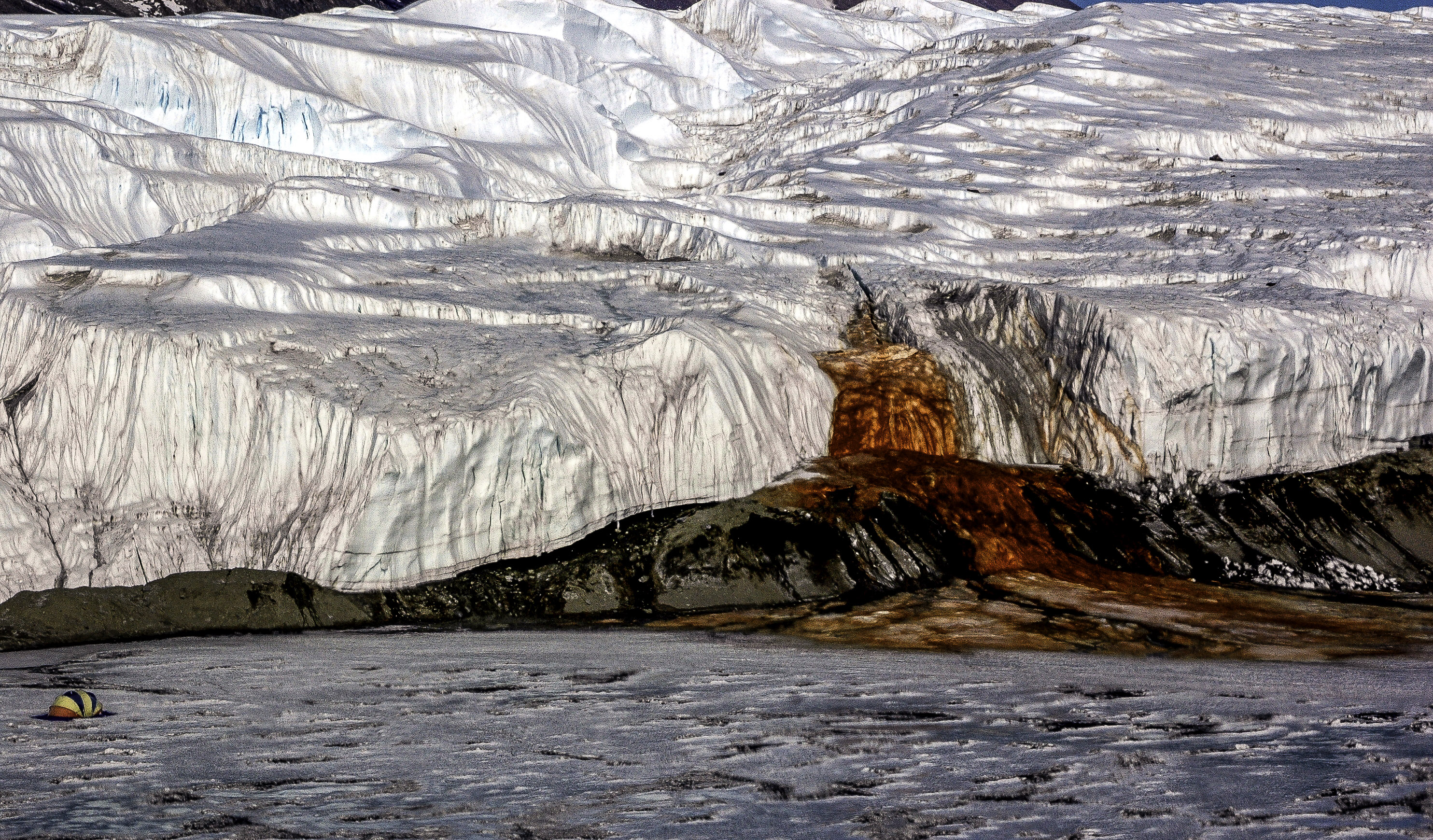
Blood Falls flowing from Taylor Glacier in Antarctica

Blood Falls seeping from the end of Taylor Glacier into Lake Bonney, Antarctica

In the vast, icy expanse of Antarctica, where pristine white landscapes stretch as far as the eye can see, there exists a startling anomaly that appears as if the glacier itself is bleeding. Blood Falls, a rust-colored waterfall flowing from the Taylor Glacier in Antarctica's McMurdo Dry Valleys, presents one of Earth's most visually striking and scientifically fascinating natural phenomena. This crimson outflow, staining the white face of the glacier and the ice-covered surface of Lake Bonney below, has captivated scientists and visitors alike since its discovery over a century ago.

The Mystery Unveiled

When Australian geologist Griffith Taylor first discovered this peculiar feature during an expedition in 1911, he initially attributed the red coloration to algae. This was a reasonable assumption at the time, as red algae are known to thrive in extreme environments. However, the true explanation would prove far more extraordinary and would take nearly a century to fully unravel.

For decades, the blood-red waterfall remained a scientific enigma, with various theories proposed to explain its unusual appearance. It wasn't until the early 2000s that researchers began to piece together the complex story behind Blood Falls, revealing a tale that spans millions of years and involves ancient microbes, subglacial lakes, and unique geochemical processes.

The breakthrough came when scientists discovered that the source of the red coloration was not biological in origin, at least not directly. Instead, the vivid crimson hue comes from iron oxides—essentially rust. When the iron-rich water from beneath the glacier comes into contact with the oxygen in the air, the dissolved ferrous iron (Fe²⁺) oxidizes to ferric iron (Fe³⁺), creating the striking blood-red color that gives the falls their name.

But this explanation only raised more questions: Where was this iron coming from? How had it remained in solution beneath the glacier? And perhaps most intriguingly, could anything actually live in such an extreme environment?

The Ancient Subglacial Ecosystem

The answers to these questions revealed an even more fascinating story. Approximately 2 million years ago, when sea levels were higher, the Taylor Valley was flooded with seawater. As the climate cooled and sea levels dropped, this marine water became trapped and eventually covered by the advancing Taylor Glacier. This ancient seawater, now a hypersaline brine about three times saltier than the ocean and rich in iron and sulfur compounds, has remained liquid despite being buried beneath 400 meters of ice in temperatures well below freezing.

This subglacial reservoir has been isolated from the outside world for millions of years, creating what scientists call a "time capsule" of ancient marine conditions. The extreme pressure from the overlying glacier, combined with the high salt content of the water, prevents it from freezing even at temperatures as low as -5°C (23°F).

But perhaps the most extraordinary discovery came in 2009 when researchers found that this inhospitable environment harbors a community of microbes that have evolved to survive without oxygen or sunlight. These remarkable organisms have been isolated from the rest of the world for millions of years, forced to adapt to their extreme habitat by developing unique metabolic pathways.

Unlike most life on Earth that relies on photosynthesis or oxygen for energy, these microbes survive by "breathing" iron and sulfur compounds. They extract energy by facilitating the chemical reaction between the iron and sulfate in the brine, essentially using these minerals the way we use oxygen. This metabolic process, known as chemosynthesis, allows them to survive in one of the most extreme environments on our planet.

The microbes' activity actually contributes to the chemical composition of the brine, helping to keep the iron in its reduced, soluble form (Fe²⁺) until it reaches the surface and contacts atmospheric oxygen. This microbial community represents one of the most extreme examples of life's adaptability on Earth and has profound implications for our understanding of how life might exist in similarly harsh environments elsewhere in the universe.

Scientific Significance

The discovery of this ancient ecosystem beneath the Taylor Glacier has had far-reaching implications across multiple scientific disciplines. For astrobiologists, Blood Falls provides a terrestrial analog for potential habitats on other worlds, particularly icy moons like Jupiter's Europa or Saturn's Enceladus, which are thought to harbor subsurface oceans.

The microbes of Blood Falls demonstrate that life can exist in environments completely isolated from sunlight and oxygen, surviving on nothing but the chemical energy available from mineral compounds. This expands our understanding of the potential habitable zones in our solar system and beyond, suggesting that life might be more resilient and widespread than previously thought.

For glaciologists, Blood Falls offers a rare glimpse into the subglacial environment without the need for expensive and logistically challenging drilling operations. The outflow provides a natural "window" into processes occurring beneath the ice, helping scientists understand the complex hydrology of glaciers and ice sheets.

The unique geochemistry of Blood Falls has also attracted attention from geologists and geochemists. The interaction between the ancient marine brine, the overlying glacier, and the microbial community creates a natural laboratory for studying mineral transformations, brine evolution, and biogeochemical cycling in extreme environments.

In 2017, researchers made another significant discovery about Blood Falls when they used radio echo sounding to map the path of the brine through the glacier. They found that the saltwater travels through a complex network of channels and cracks in the ice, following the path of least resistance to eventually emerge at the glacier's terminus. This finding challenged the previous understanding of glacier hydrology, which had assumed that water couldn't travel through solid ice without refreezing.

Most recently, in 2023, scientists from Johns Hopkins University and the University of Colorado Boulder used novel techniques to determine that the brine reservoir beneath Taylor Glacier is much more extensive than previously thought, potentially connecting to a larger subglacial hydrological system. This research suggests that similar subsurface brine networks might exist elsewhere in Antarctica, with important implications for our understanding of subglacial ecosystems and their potential influence on ice sheet dynamics.

Accessing and Viewing Blood Falls

Located in the McMurdo Dry Valleys, one of the most extreme deserts on Earth and one of the few ice-free areas in Antarctica, Blood Falls is not easily accessible to casual visitors. The region is protected as an Antarctic Specially Managed Area (ASMA) due to its scientific importance and ecological sensitivity.

Research expeditions to Blood Falls typically operate out of McMurdo Station, the largest research station in Antarctica, located on Ross Island about 100 kilometers away. Access to the site requires helicopter transport and special permits, with strict protocols in place to minimize human impact on this pristine environment.

For scientists working at Blood Falls, the challenges are considerable. The extreme cold, with temperatures rarely rising above freezing even in summer, combined with the region's aridity and strong katabatic winds, creates harsh working conditions. Researchers must carefully plan their sampling strategies to avoid contaminating the site while also protecting themselves from the elements.

Sampling the brine directly from the outflow allows scientists to study its chemical composition and microbial community without disturbing the subglacial environment. However, the flow is not constant throughout the year, with the most active discharge typically occurring during the austral summer (November to February) when slightly warmer temperatures allow more brine to escape from beneath the glacier.

While direct access to Blood Falls is limited to scientific expeditions, the striking images of this crimson cascade against the white backdrop of the glacier have captured public imagination worldwide. These photographs, along with scientific documentaries and virtual tours, allow people around the globe to appreciate this natural wonder without physically visiting the fragile Antarctic environment.

Similar Phenomena Around the World

While Blood Falls is unique in many ways, similar iron-rich discharges occur in other locations around the world, though none are quite as dramatic or well-studied. These analogous features provide valuable comparative data for scientists studying the processes at work in Blood Falls.

In the Canadian Arctic, on Devon Island, researchers have documented iron-stained ice features that share some characteristics with Blood Falls. These "rust streaks" form when iron-rich groundwater seeps to the surface and oxidizes, creating reddish stains on the ice and snow.

In Spain's Rio Tinto (literally "Red River"), acidic, iron-rich waters create a similarly striking red coloration. Unlike Blood Falls, however, the Rio Tinto's color comes from both iron oxidation and extremophile microorganisms that thrive in its highly acidic waters (pH 2). These microbes, like those in Blood Falls, have adapted to extreme conditions and use iron in their metabolic processes.

Iron-rich springs in Yellowstone National Park also create rusty deposits as iron-oxidizing bacteria facilitate the transformation of dissolved iron into solid iron oxides. These springs, while visually different from Blood Falls, involve similar biogeochemical processes.

What makes Blood Falls stand out among these similar phenomena is its dramatic appearance, its location on the face of a glacier, and the ancient origin of its source water. The combination of the stark white background of the Taylor Glacier with the vivid red of the outflow creates a visual contrast unmatched by other iron-rich discharges. Additionally, the extreme isolation of the subglacial ecosystem and its potential as an analog for extraterrestrial environments gives Blood Falls particular scientific significance.

Conservation and Protection

The McMurdo Dry Valleys, including Blood Falls, are protected under the Antarctic Treaty System as an Antarctic Specially Managed Area. This designation recognizes the region's exceptional scientific value and aims to minimize human impact while facilitating research activities.

The management plan for the area includes strict guidelines for visitors, whether scientists or support personnel. These guidelines cover waste management, movement within the area, sampling protocols, and measures to prevent the introduction of non-native species. All research activities must be approved in advance and conducted in a manner that minimizes disturbance to the environment.

Climate change poses a potential threat to Blood Falls and the unique ecosystem it represents. As global temperatures rise, changes in glacier dynamics could alter the flow of the brine or even eventually lead to the retreat of the Taylor Glacier. While the subglacial reservoir has remained stable for millions of years, the rapid pace of current climate change introduces uncertainty about its future.

Monitoring programs track changes in the flow rate, chemical composition, and microbial community of Blood Falls over time. These observations help scientists understand how this unique feature responds to environmental changes and may provide early warnings of significant alterations to the system.

The scientific community recognizes the importance of preserving Blood Falls not only as a natural wonder but also as a valuable research site. The ongoing discoveries made at this location continue to expand our understanding of life's adaptability and the complex interactions between geology, glaciology, and biology in extreme environments.

Conclusion: A Window into Earth's Hidden Ecosystems

Blood Falls stands as a vivid reminder that our planet still harbors secrets in its most remote corners. This crimson outflow from the Taylor Glacier represents far more than a visual curiosity—it provides a glimpse into a hidden world where life has found a way to thrive in conditions once thought incompatible with biological processes.

The story of Blood Falls is one of scientific discovery and persistent inquiry. What began as a geological curiosity noted by early Antarctic explorers has evolved into a multidisciplinary research site yielding insights relevant to fields ranging from microbiology to astrobiology. Each new investigation has peeled back another layer of this complex natural system, revealing ever more fascinating details about the processes at work beneath the ice.

For the microbes that inhabit the subglacial brine, Blood Falls represents the only connection to the outside world they have had in millions of years. These ancient organisms, descendants of marine microbes trapped when the ocean retreated from the valley, have evolved in isolation to create a unique ecosystem unlike any other on Earth. Their ability to survive without sunlight or oxygen, instead deriving energy from chemical reactions involving iron and sulfur, expands our understanding of life's fundamental requirements and adaptability.

As we continue to explore extreme environments on Earth, from the deepest ocean trenches to the driest deserts, discoveries like Blood Falls remind us that life is remarkably tenacious and diverse. The existence of thriving microbial communities in such harsh conditions suggests that life might exist in places we once considered barren, both on our own planet and potentially elsewhere in the universe.

In its striking appearance and scientific significance, Blood Falls embodies the wonder of natural phenomena—how ordinary processes like oxidation can create extraordinary features when they occur in unique contexts. It stands as a testament to the complex and often hidden processes that shape our planet, processes that continue whether or not human eyes are there to witness them.

As research continues at Blood Falls, each new finding adds to our appreciation of this remarkable feature and the insights it provides into Earth's hidden ecosystems. In the crimson flow emerging from the white face of Taylor Glacier, we find not only a visually stunning natural phenomenon but also a window into the remarkable adaptability of life and the countless wonders that still await discovery in Earth's most extreme environments.

Image Credit: Blood Falls in Antarctica - Photo by National Science Foundation/Peter Rejcek, public domain via GoodFreePhotos.

Nacreous Clouds: The Ethereal Mother-of-Pearl Skies


High above the frozen landscapes of Earth's polar regions, a rare and spectacular atmospheric phenomenon occasionally graces the skies. Nacreous clouds, also known as polar stratospheric clouds or mother-of-pearl clouds, are among the most beautiful and unusual cloud formations on our planet. With their vibrant, iridescent colors that shimmer like oil on water or the inside of an abalone shell, these clouds transform the polar skies into a canvas of swirling pastels that seem almost otherworldly.


Nacreous clouds displaying their characteristic iridescent colors over Antarctica.
Photo: Pixabay (Free for commercial use)

Unlike common tropospheric clouds that form in the lower atmosphere, nacreous clouds develop in the stratosphere at altitudes between 15,000 and 25,000 meters (49,000 to 82,000 feet). Their appearance is so rare and striking that they've inspired awe, scientific curiosity, and even folklore throughout human history. Yet behind their breathtaking beauty lies a complex and somewhat troubling role in atmospheric chemistry, particularly related to ozone depletion.

In this exploration of nacreous clouds, we'll delve into the science behind their formation, their visual characteristics, where and when they can be observed, their environmental impact, and the cultural significance they hold. These remarkable clouds represent a perfect example of how nature's most beautiful displays can also reveal important insights into our planet's delicate atmospheric balance.

The Science Behind the Shimmer

Nacreous clouds form under extremely specific and rare conditions in the stratosphere, the second major layer of Earth's atmosphere. While most weather occurs in the troposphere (the lowest layer of the atmosphere), the stratosphere is typically dry and cloud-free. For nacreous clouds to develop, temperatures must plummet to an extraordinary -78°C (-108°F) or below.


Spectacular nacreous clouds illuminating the sky over Ross Island, Antarctica.
Photo: Pixabay (Free for commercial use)

These frigid temperatures typically occur during polar winter when the stratosphere is at its coldest. The formation process begins when tiny amounts of water vapor in the stratosphere—normally too sparse to form clouds—condense directly into ice crystals under these extreme conditions. What makes nacreous clouds different from typical cirrus clouds (which also contain ice crystals) is both their altitude and the size and uniformity of their ice particles.

Scientists classify polar stratospheric clouds into two main types:

1. Type I PSCs form at temperatures around -78°C and consist primarily of nitric acid and water. These are further divided into:
- Type Ia: Solid crystals of nitric acid trihydrate (NAT)
- Type Ib: Supercooled liquid droplets containing nitric acid, sulfuric acid, and water

2. Type II PSCs form at even colder temperatures (below -85°C) and are composed primarily of water ice crystals. These are the clouds most commonly referred to as "nacreous" due to their distinctive iridescent appearance.

The extraordinary visual properties of nacreous clouds result from the precise size and uniformity of their ice crystals. These particles, typically 1-10 micrometers in diameter, are perfectly sized to diffract sunlight through a process called optical interference. When sunlight passes through these thin, uniform ice crystals, different wavelengths (colors) of light are scattered at slightly different angles, creating the characteristic rainbow-like effect.

What makes this diffraction particularly vivid is the timing of nacreous cloud viewing. They are most visible during civil twilight—when the sun is between 1° and 6° below the horizon. At this time, the clouds in the stratosphere are still illuminated by direct sunlight while the observer on the ground is in darkness, creating a dramatic contrast that makes the colors appear even more vibrant against the darkening sky.

The wave-like patterns often seen in nacreous clouds are the result of atmospheric gravity waves. When air flows over mountains or other topographical features, it can create undulating patterns that propagate upward into the stratosphere. These waves create areas of slightly different temperature and pressure, which in turn affect the formation and arrangement of ice crystals in the clouds, resulting in their characteristic rippled appearance.

Recent research has revealed that nacreous clouds often form in the wake of strong tropospheric weather systems, particularly when polar jet streams interact with mountain ranges. The resulting upward propagation of energy can create the necessary conditions for these rare clouds to form, explaining why they're often observed downwind of major mountain chains in polar regions.

Visual Characteristics and Appearance

The visual splendor of nacreous clouds is what makes them so remarkable and memorable to observers. Their name "nacreous" comes from "nacre," the scientific term for mother-of-pearl—the iridescent material that lines the inside of certain mollusk shells. This comparison is apt, as the clouds display a similar shifting palette of delicate colors.

When viewed during twilight hours, nacreous clouds exhibit a range of pastel hues: pinks, greens, blues, and purples that seem to shift and change as the viewing angle changes. This iridescence is not static but appears to ripple and flow across the clouds, creating an almost hypnotic effect. The colors are most intense when the sun is between 1° and 6° below the horizon, providing just the right angle of illumination to maximize the diffraction effects.

The texture and structure of nacreous clouds are equally distinctive. They typically appear smooth and lens-shaped (lenticular), often forming in stacked or overlapping layers. Their edges are sharply defined compared to tropospheric clouds, and they frequently display a wave-like or rippled pattern that adds to their otherworldly appearance. These waves can stretch across large portions of the sky, creating a marbled effect that resembles oil spreading across water.

Unlike most clouds that appear white or gray, nacreous clouds stand out dramatically against the twilight sky. Their brightness can be surprising, sometimes appearing to glow from within as they reflect sunlight from above the horizon. This luminosity, combined with their high altitude, means they can remain visible for extended periods after sunset or before sunrise when other clouds have faded into darkness.

The appearance of nacreous clouds changes throughout their visibility period. When first illuminated by the setting sun, they often display predominantly warm colors—pinks, oranges, and golds. As twilight deepens, the color spectrum shifts toward cooler tones—blues, greens, and purples. This transition adds to the dynamic nature of the display and rewards patient observers who watch the entire evolution.

Photographers attempting to capture nacreous clouds face unique challenges due to the low light conditions and the subtle color variations. The clouds' high altitude also means they often appear relatively small in the frame compared to tropospheric clouds, requiring longer focal lengths to capture their detail. However, when successfully photographed, nacreous clouds create some of the most striking atmospheric images possible, showcasing colors and patterns rarely seen elsewhere in nature.

From a visual perspective, nacreous clouds are sometimes confused with the more common phenomenon of irisation or iridescent clouds, which can occur in tropospheric clouds. However, true nacreous clouds are distinguished by their higher altitude, their appearance during twilight hours rather than daytime, and their more extensive and pronounced color display.

Where and When to Observe Nacreous Clouds

Witnessing nacreous clouds requires being in the right place at the right time under very specific conditions. These clouds are primarily a polar phenomenon, occurring most frequently in the winter months when stratospheric temperatures are at their lowest.

Geographic Locations

The best places to observe nacreous clouds include:

1. Antarctica - The continent experiences some of the coldest stratospheric temperatures on Earth, making it a prime location for nacreous cloud formation. Research stations like McMurdo Station report regular sightings during the Antarctic winter.

2. Arctic regions - Northern Scandinavia (particularly northern Norway, Sweden, and Finland), Iceland, northern Russia, Alaska, and northern Canada all offer good viewing opportunities.

3. Scotland and northern United Kingdom - While less frequent than in true polar regions, nacreous clouds are occasionally visible from northern parts of the UK, particularly Scotland, which has recorded several notable displays in recent years.

4. New Zealand's South Island - The southern parts of New Zealand occasionally experience conditions suitable for nacreous cloud formation during their winter months.

5. Southern tip of South America - Patagonia and Tierra del Fuego can sometimes offer viewing opportunities during the Southern Hemisphere winter.

Seasonal and Time Considerations

The optimal conditions for viewing nacreous clouds include:

1. Winter months - In the Northern Hemisphere, December through February provide the best chances, while in the Southern Hemisphere, June through August are optimal.

2. Civil twilight - The period when the sun is between 1° and 6° below the horizon, either just after sunset or before sunrise. This timing is crucial as it allows the high-altitude clouds to be illuminated by sunlight while the observer is in darkness.

3. Clear lower atmosphere - While nacreous clouds form in the stratosphere, viewing them requires relatively clear conditions in the troposphere below.

Frozen in Time: The Mesmerizing World of Methane Bubbles

In the vast tapestry of Earth's natural wonders, some phenomena stand out for their otherworldly beauty and scientific significan...